
Article 01
The implement
The object thrown is a retired compressor – a test veteran that has already served its operating hours. The same unit for every competitor, so nobody can blame the aerodynamics.
Same for all
A discipline athletics doesn’t know yet – but we’ve been training it for decades. Two attempts. One line. And a compressor that flies farther than you’d think.
Nine and a half meters. With gravity, not against it. The record is measured, logged and recognized. Just one warning applies: don’t try 9.50 m at home.
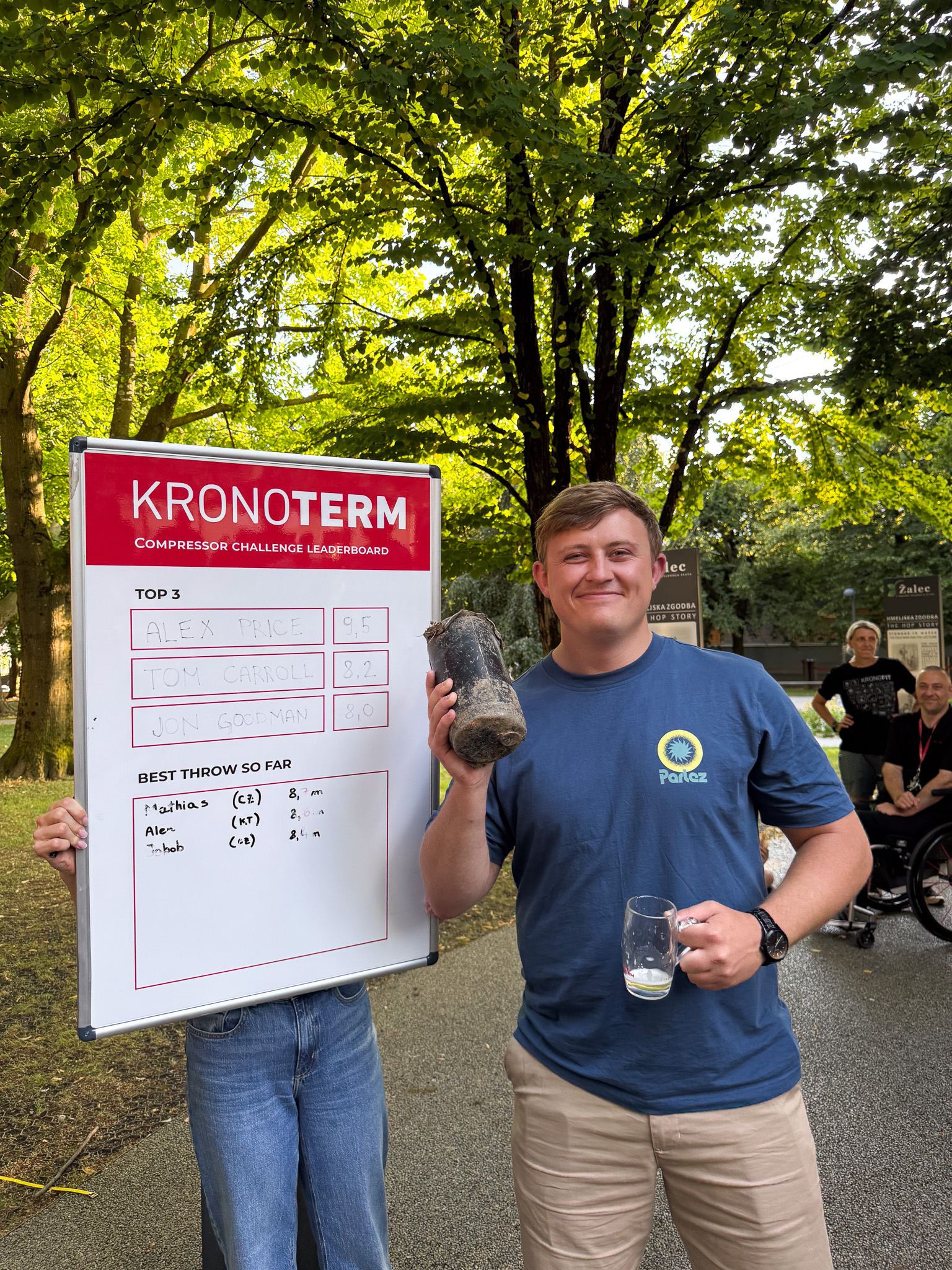
At KRONOTERM gatherings there’s a traditional moment when talk of SCOP values gives way to something more primal: who throws the compressor the farthest.
The lead role doesn’t go to just any compressor. Taking the stage are exclusively retired veterans – units that honorably ended their careers in our test lab. Thousands of operating hours, and finally one last, most beautiful flight.
The rules are simple, the emotions bigger every year. R&D says technique matters. Production says power matters. Service stays quiet and wins.
Seven articles. No fine print. The referee’s decision is final; complaints are accepted over goulash.
The object thrown is a retired compressor – a test veteran that has already served its operating hours. The same unit for every competitor, so nobody can blame the aerodynamics.
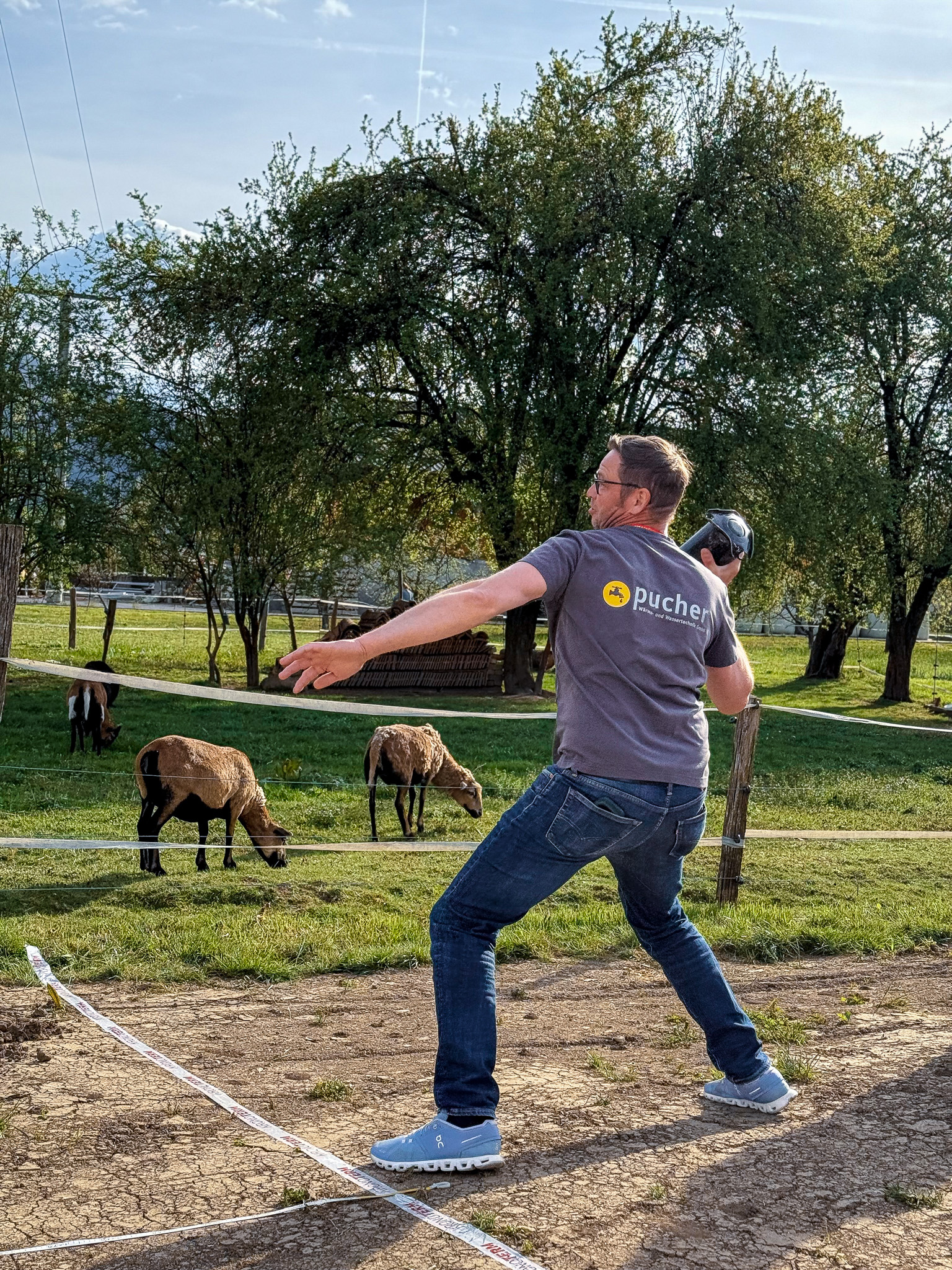
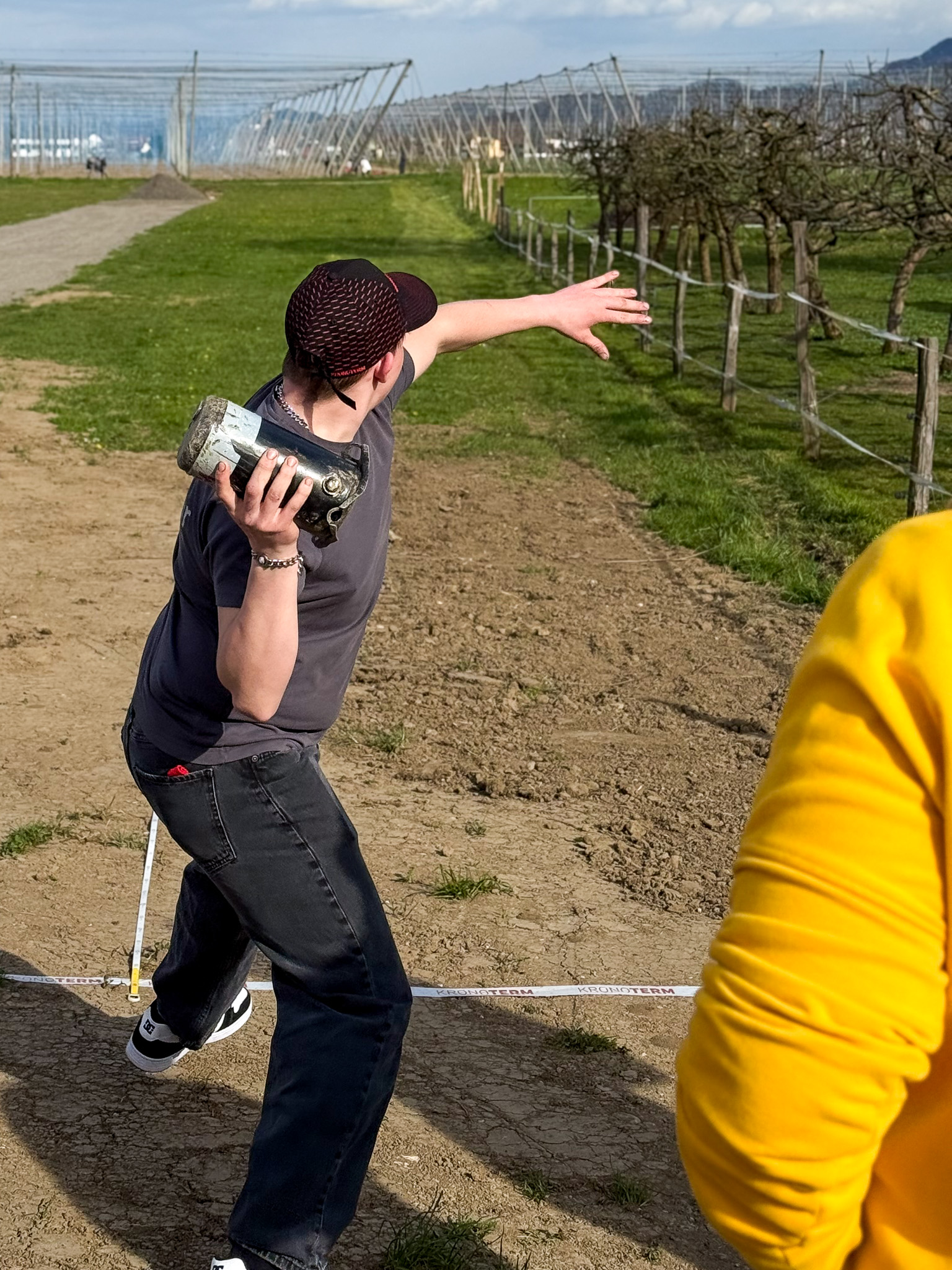
Same for allThe compressor is put – like in shot put. From the shoulder, with a single push. Wind-up throws, hammer-style spins and underhand tosses don’t count.
Wind-up = voidAllowed: a short run-up. How short ‘short’ is is up to the referee – usually enough to look determined, but not enough to need starting blocks.
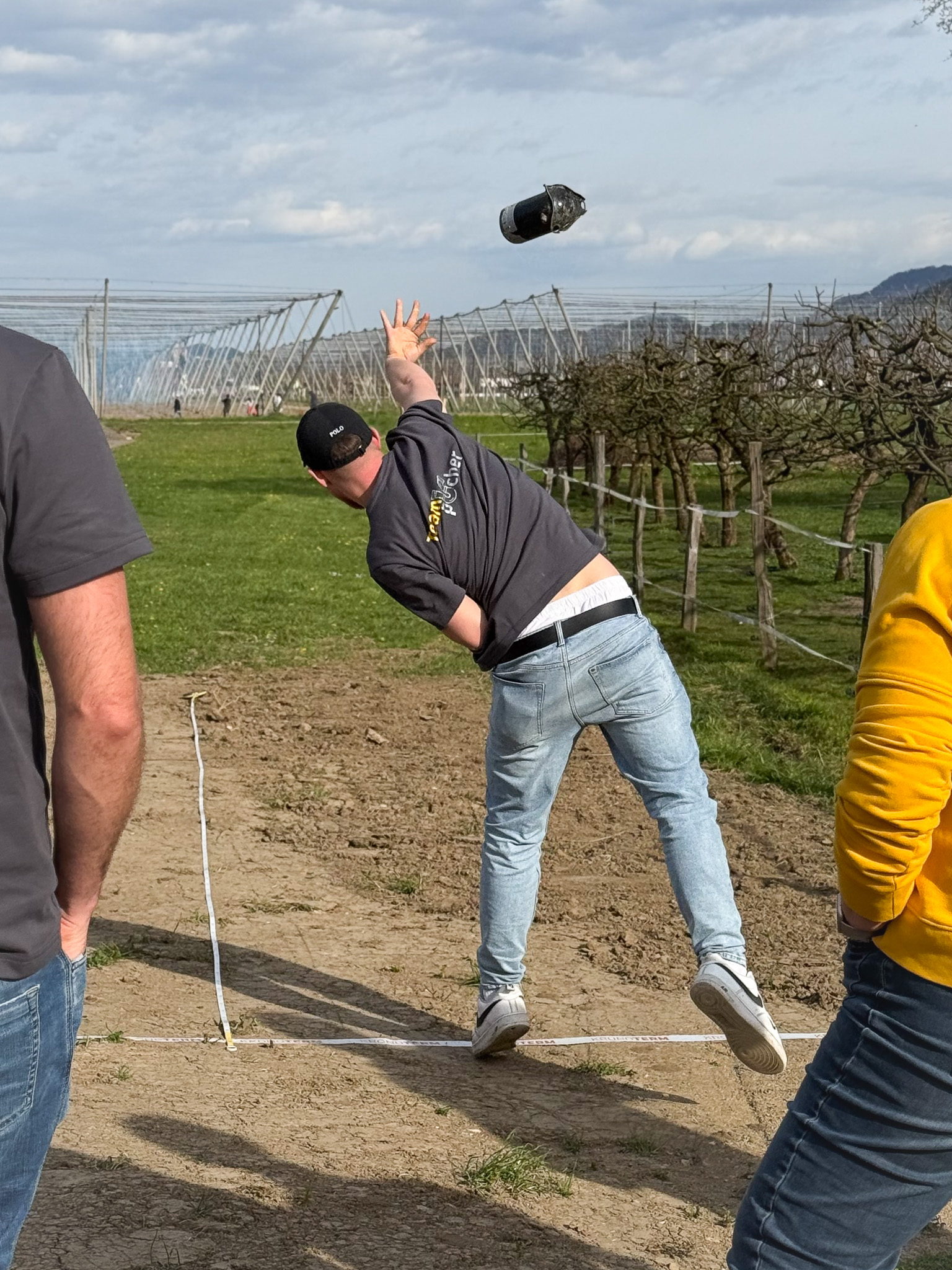
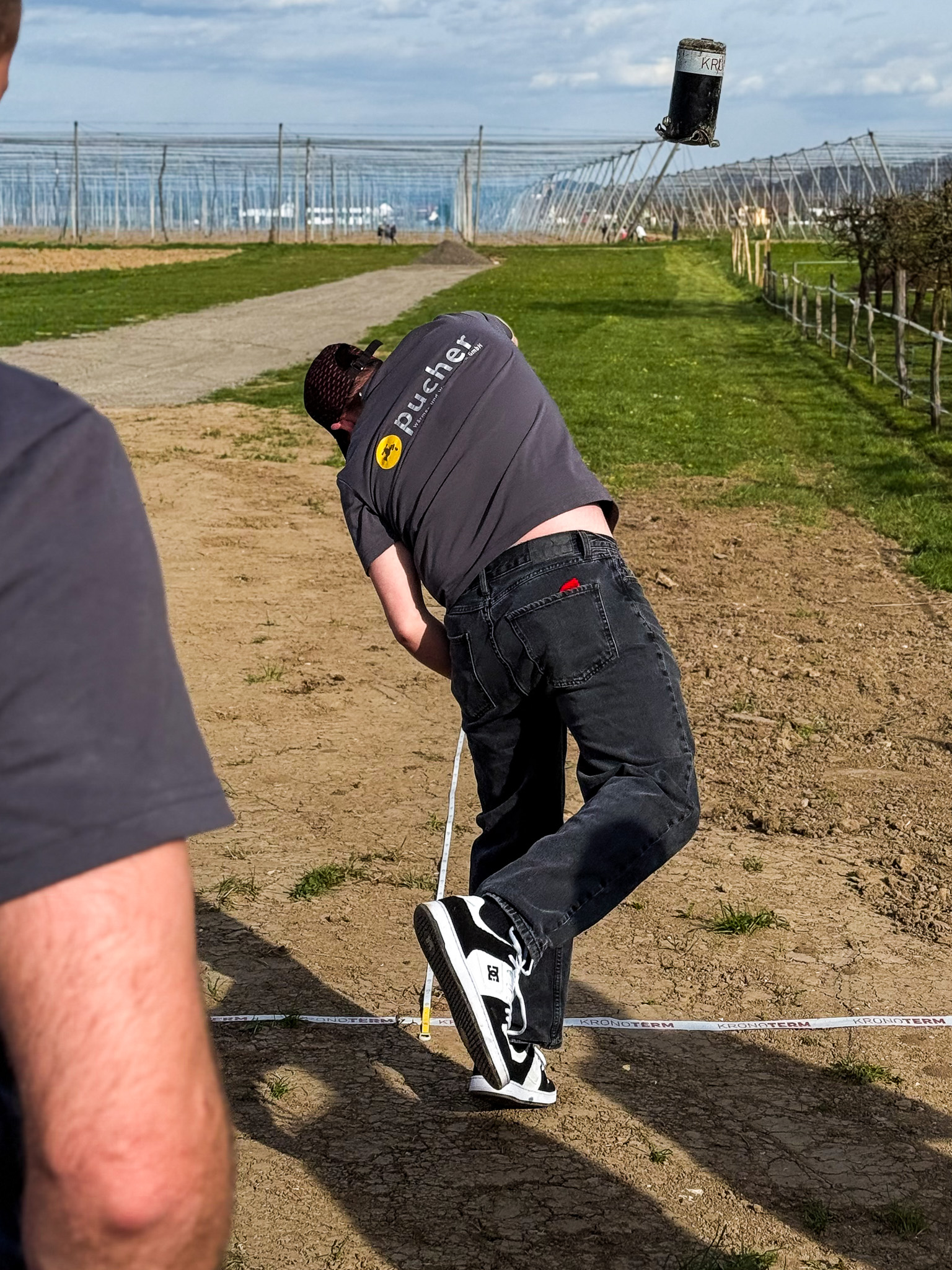
Run-up allowedThe throw is made from behind the line. Crossing the line – even with a toe, even ‘just a little’ – means a void attempt. The line sees everything.
Overstep = voidEach competitor gets 2 attempts, the longer one counts. The attempts aren’t back-to-back: everyone takes their first throw, and only then does the second round open. While you wait, you watch the competition and study their technique.
Best throw countsMeasured from the line to the first landing mark, perpendicular to the line. The tape is official and the judging crew incorruptible (verified over beer).
Down to the cmThe longest valid throw of the day wins. When the discipline recordfalls, it’s immortalized with a photo, a logbook entry and a place on this page. Until the next gathering, the record holder may mention their feat in meetings without limit.
Four phases separate the amateur from the record holder. Each one counts, and each happens in less than a second.
Compressor to the shoulder, elbow underneath, eyes on the horizon. In this moment you’re one with it – it worked for 15 years, you’ll work for 1.5 seconds.
Short, decisive, within the rules. Two or three steps – enough for momentum, too little for disqualification. Rhythm: run-run-PUT.
From the shoulder, through the hips, to the fingertips. Like shot put, except the shot weighs a shot and a half and comes with mounting feet.
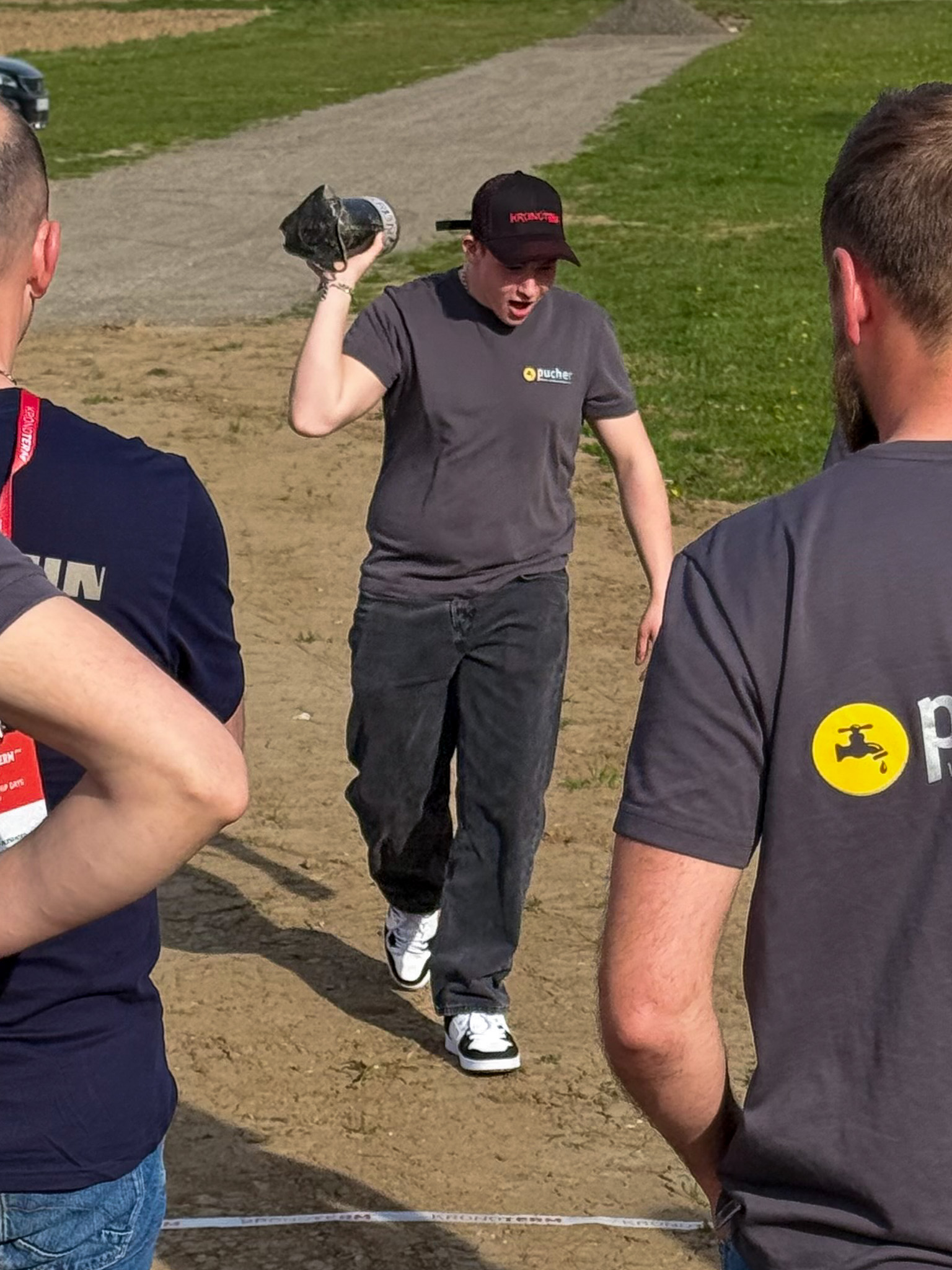
The compressor lands, the grass gives way, the tape rolls out. And you’re already raising your arms – it’s important to look convincing before the throw is even measured.
The reel fills up after every gathering – the best flights, the cleanest puts and the faces right before the moment of truth. Drag and relive it.

Five pieces of gear and one rule for collecting entries. Competitors bring the rest themselves: strength, courage and excessive self-confidence.
Entries are collected on the spot: grab the board and the marker, go around, and everyone writes their name. No web forms, no deadlines, no excuses.
The two attempts aren’t back-to-back. Everyone takes their first throw, and only then does the second round open. While you wait, you study technique and watch the competition. It’s more fun that way.
The next KRONOTERM gathering brings a fresh shot at eternal glory. You’ll get two attempts. You can start training today – we recommend lifting crates and a respectful attitude toward the line.
Learn the rules inside out